Is Bleach Safe Around Pets? What Owners Should Know Before Using It
The ASPCA says diluted bleach can be used on items like pet toys and kennels if it is thoroughly rinsed and the odor has dissipated before the pet returns. Undiluted bleach can injure the mouth and esophagus. Read the label, ventilate, keep pets away, and never mix bleach with other cleaners. This is general information, not veterinary advice.
Key takeaways
- The ASPCA says diluted bleach can be used on pet items if rinsed well and the odor has dissipated first.
- Undiluted or concentrated "ultra" bleach is the greater concern, and can be corrosive.
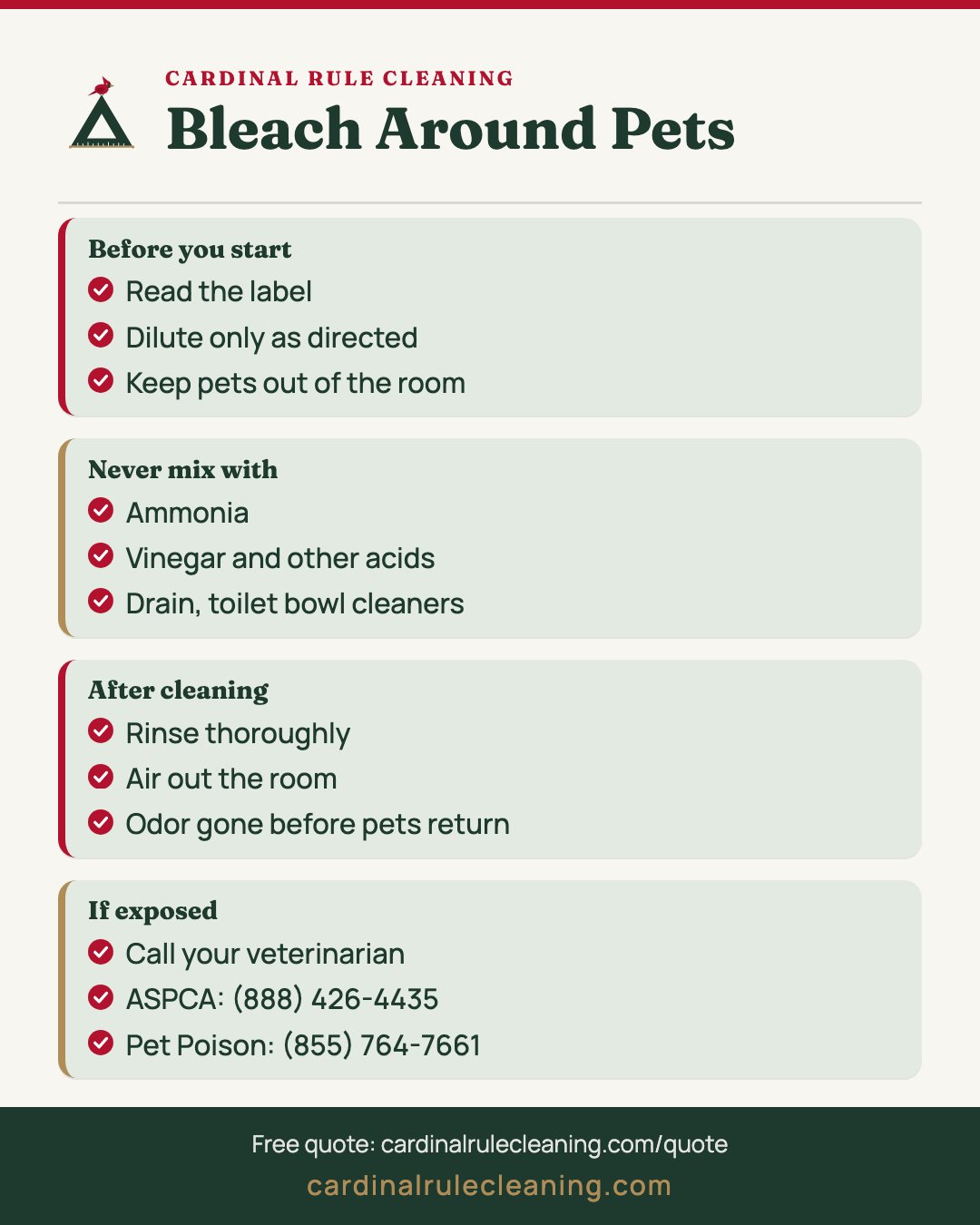
- Never mix bleach with ammonia, vinegar or other acids, or drain and toilet bowl cleaners.
- Cleaning with soap and water is often enough. Disinfecting is an extra step, per the CDC.
- If a pet is exposed, call your veterinarian, ASPCA Poison Control or Pet Poison Helpline right away.
Is bleach safe around pets?
It depends on how it is used. The ASPCA says a properly diluted bleach solution, followed by thorough rinsing and airing out, is not expected to cause harm when cleaning pet cages or toys. Ingesting undiluted bleach can injure a pet's mouth and esophagus. General information only; ask your veterinarian about your own pet.
The ASPCA's guidance is specific. Diluted bleach can be used to clean pet toys and kennels, as long as it is diluted, thoroughly rinsed, and the bleach odor has dissipated before the pet is allowed back around the items. If the smell seems overwhelming, it suggests opening windows and using fans.
Pet Poison Helpline describes the other side. A small exposure to regular-strength household bleach, such as a pet walking through a puddle, may irritate the skin and damage fur. Dermal exposure often leads to ingestion, because animals self-groom and lick the bleach off. Concentrated or "ultra" bleaches may be corrosive, so extra caution is needed with them.
So the honest answer is not a simple yes or no. Bleach is a hazardous product that can be used with care, and the care is the whole point.
What can happen if a pet is exposed to bleach?
Pet Poison Helpline says skin contact can cause irritation and damaged fur, and licking it off can lead to vomiting and stomach irritation that may need veterinary treatment. Bleach in the eye can be an emergency for people and pets, and any animal with eye exposure should be examined by a veterinarian.
- Skin and paws: irritation and bleached or damaged fur. Thorough rinsing of the feet is important, including between the toes and pads.
- Swallowed: vomiting and stomach irritation. The ASPCA notes that undiluted bleach can injure the mouth and esophagus, especially at high concentration or high pH.
- Eyes: may need immediate flushing, and a veterinary exam.
- Fumes: Pet Poison Helpline notes that injuries can occur when animals inhale fumes or aerosolized spray of some products.
These are descriptions from poison-control sources, not a way to assess your own pet. If you think an exposure happened, skip to the call list in the last sections of this guide.
How do you use bleach safely in a home with pets?
Follow the product label, dilute only as directed, rinse surfaces thoroughly, and keep pets out of the area until the odor has dissipated and the surface is dry. The ASPCA also advises opening windows, using fans, disposing of dirty solution and putting mops away where pets cannot reach them.
- Read the label. The ASPCA says always follow label directions for usage.
- Dilute as directed. The ASPCA says diluted bleach can be used on pet toys and kennels.
- Rinse and air out. Rinse thoroughly, and open windows and run fans if the smell is strong.
- Keep pets away. Pet Poison Helpline says to keep pets out of the room, especially if you are using an open mop bucket. It also advises closed doors and open windows in the bathroom.
- Clean up. Dispose of used solution, put mops and cloths where pets cannot reach, and discard wet paper towels in a covered trash can.
- Wait. Do not let the pet back until the odor has dissipated, per the ASPCA.
If you are cleaning pet bowls or toys, the CDC says cleaning is usually good enough for most pet items and disinfecting is an additional step in some situations. Our guide to sanitizing versus disinfecting explains the difference.
What should you never mix with bleach?
Never mix bleach with ammonia, vinegar or other acids, drain cleaners, and some oven cleaners or hydrogen peroxide. The Washington State Department of Health says bleach and ammonia make toxic chloramine gases, and bleach with acids gives off chlorine gas. Pet Poison Helpline also warns never to mix bleach with other chemicals.
| Mixing bleach with | What can form |
|---|---|
| Ammonia (found in some glass cleaners) | Toxic chloramine gases |
| Acids: vinegar, some toilet bowl cleaners, drain cleaners, rust removers | Chlorine gas |
| Some oven cleaners, hydrogen peroxide, some insecticides | Reactions the Washington State Department of Health warns about |
The Washington State Department of Health lists coughing, shortness of breath, watery eyes, chest pain and irritation to the throat, nose and eyes among the effects of chloramine exposure, and says chlorine gas exposure can cause breathing problems at even low levels. It also notes that the active ingredient in chlorine bleach, sodium hypochlorite, is found in many other disinfectants, so check labels for the word "bleach."
This is also why vinegar-and-bleach "boosters" are a bad idea. See what not to clean with vinegar.
Do you need bleach at all in a home with pets?
Often not. The CDC says cleaning with soap or detergent is usually good enough for most pet items, and disinfecting is an additional step in some situations. EPA also notes that disinfectants are pesticides that can be harmful, so read the label before using any. Alternatives have their own precautions.
Cleaning removes dirt and germs physically. Disinfecting uses chemicals to kill germs. For daily upkeep, the CDC says cleaning is usually enough for pet items. When you do choose to disinfect, EPA says to read and understand the precautionary language on the label, since disinfectants are regulated pesticides.
Switching products does not remove the need for care. Pet Poison Helpline lists other disinfecting ingredients, including hydrogen peroxide, quaternary ammonium compounds, phenols and isopropyl alcohol, as having their own risks for pets. For ideas, see how to disinfect without bleach and our overview of cleaning products and dogs.
What should you do if your pet is exposed to bleach?
Call your veterinarian or a poison hotline immediately. The ASPCA Animal Poison Control Center number is (888) 426-4435, and Pet Poison Helpline's is (855) 764-7661. Have the product label ready. For skin contact, Pet Poison Helpline stresses thorough rinsing of the feet. For eyes, immediate flushing may be needed.
- ASPCA Animal Poison Control: (888) 426-4435
- Pet Poison Helpline: (855) 764-7661
Both recommend contacting them or your veterinarian immediately with any possible exposure. The ASPCA also stresses that its published guide is for general information and is not meant to assess or manage a specific exposure.
If you are hiring a cleaner, ask whether bleach is part of their routine, and tell them about your pets and where the animals will be. Cardinal Rule Cleaning provides house cleaning in the Raleigh area. When you request a free quote, you can ask any company which products it uses. More on pet households: pet-friendly house cleaning in Raleigh.
Want this done for you? See our House Cleaning service or request a free quote.
Get your free house cleaning quote
Takes about 60 seconds. No obligation.
Frequently asked questions
Can pets be around a freshly bleached floor?
Not until it is ready. The ASPCA says bleached items should be diluted, thoroughly rinsed and the bleach odor dissipated before a pet returns. Pet Poison Helpline recommends keeping pets out of the room during cleaning. Follow the product label for its own wait time and rinse directions.
Is bleach toxic to dogs and cats?
Poison-control sources say it can be harmful. Pet Poison Helpline lists skin irritation, vomiting and stomach irritation, and possible eye emergencies, and says concentrated bleach may be corrosive. The ASPCA says undiluted bleach can injure the mouth and esophagus. Use only as directed and keep pets away.
Can I mix bleach with vinegar for extra cleaning power?
No. The Washington State Department of Health says mixing bleach with an acid, such as vinegar, releases chlorine gas, which can irritate the eyes, throat and lungs. It also warns against mixing bleach with ammonia. Use one product at a time, rinse between products, and ventilate.
Does cleaning pet bowls and toys require bleach?
Not necessarily. The CDC says cleaning is usually good enough for most pet items, and disinfecting is an additional step for some situations. When using any disinfectant, follow the label exactly and rinse thoroughly. The ASPCA allows diluted, well-rinsed bleach on toys and kennels.
What should I ask a cleaning company about bleach?
Ask any company whether bleach is part of its routine, where it is used, and how pets are kept away. If bleach matters to you for any reason, ask for the answer in writing before booking, and ask your veterinarian about specific concerns for your pets.