How to Get Rid of Dust in Your House Naturally: A Simple Routine
Use water, not sprays: dust hard surfaces with a damp cloth, vacuum carpets and fabric furniture weekly with a HEPA-filtered vacuum, and cut clutter and incoming dust at the source. The EPA and the American Lung Association both recommend damp methods so dust is not stirred back into the air.
Key takeaways
- Damp cloths, damp mops and dust-trapping dusters keep dust from going back into the air (EPA, ALA).
- Vacuum carpets and fabric furniture weekly, ideally with a HEPA filter.
- Dust comes in from outside and is made indoors, so reduce sources and clutter.
- The bedroom usually has the most dust mites; weekly hot-water bedding washes help (AAFA).
- Filters help with airborne particles but do not replace wiping and vacuuming.
How do you get rid of dust in your house naturally?
Use water, not sprays: dust hard surfaces with a damp cloth, vacuum carpets and fabric furniture weekly with a HEPA-filtered vacuum, and cut clutter and incoming dust at the source. The EPA and the American Lung Association both say damp methods keep dust from being stirred back into the air.
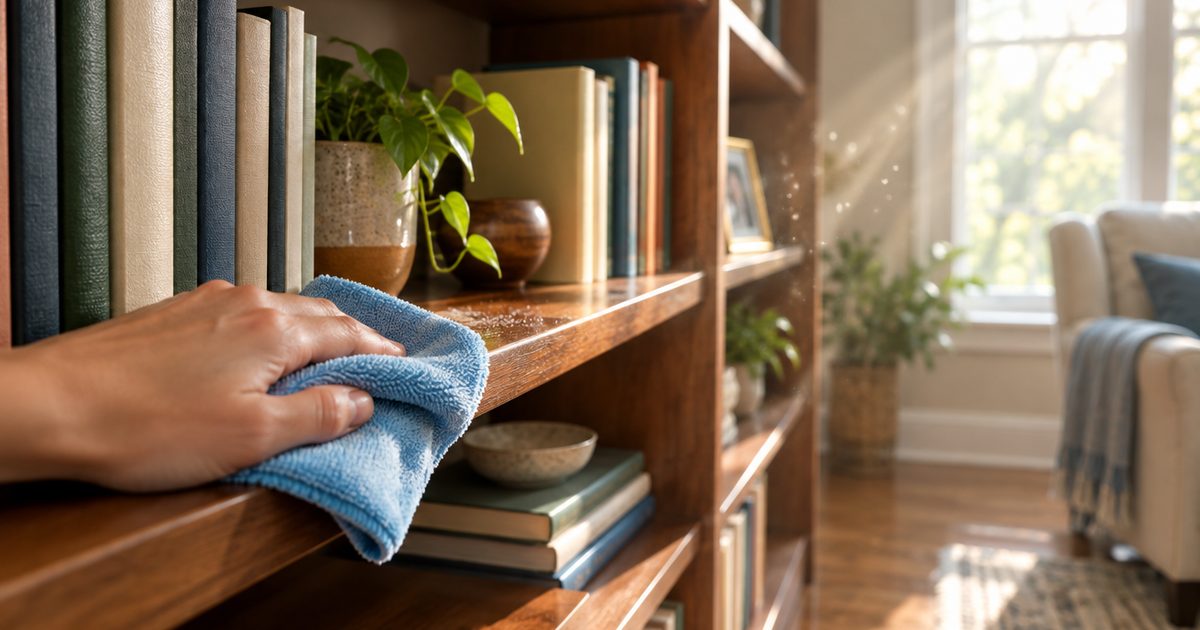
You cannot eliminate dust, but you can keep it down with a short routine. The EPA's cleaning guidance for people with asthma and allergies says dusting hard-surface furniture and floors with a damp cloth can help reduce putting dust into the air, and that vacuuming carpets and fabric-covered furniture every week can help reduce build-up. The American Lung Association likewise recommends a damp mop, damp cloth or a duster that traps dust, and suggests focusing on spots that collect dust, such as baseboards, molding, blinds and shelves.
That is the whole "natural" approach: plain water and a cloth, plus a good vacuum. For anything beyond that, the EPA suggests considering soap and water first when cleaning.
What is household dust actually made of?
Dust is settled particles from many sources. The EPA says it can include pollen, mold spores, pet dander, dust mite and cockroach droppings, and human skin cells. The American Lung Association adds that dead skin cells, dust mite droppings and dust mite body fragments make up a large part of it.
The EPA describes indoor dust as settled particulate matter from a variety of sources. Because it carries allergens, cleaning it up matters most for people with asthma or allergies. EPA also notes children are exposed to more indoor dust than adults because they crawl and play closer to the floor.
This is general information, not medical advice. If dust seems to trigger symptoms, talk to your doctor. Our posts on allergy-friendly house cleaning and reducing pet allergens go deeper on those topics.
Why does dust keep coming back?
Dust arrives from outside and is made inside. The EPA says outdoor air carries particles in through open doors and windows and through small cracks, while everyday activity indoors adds more. Walking, sweeping, dusting and vacuuming can also stir settled dust back into the air.
According to the EPA, outdoor particles from sources such as road dust, smoke and pollen travel indoors through windows, doors, and small cracks and crevices. Indoors, cooking, burning candles and other activities add particles too. That means a freshly dusted shelf is not permanently clean.
The EPA's advice is that the best way to reduce indoor particles is usually to reduce their sources. The EPA suggests checking outdoor air quality at AirNow.gov before opening windows, and keeping surfaces clear gives dust less to settle on.
What is the best routine for dusting a whole house?
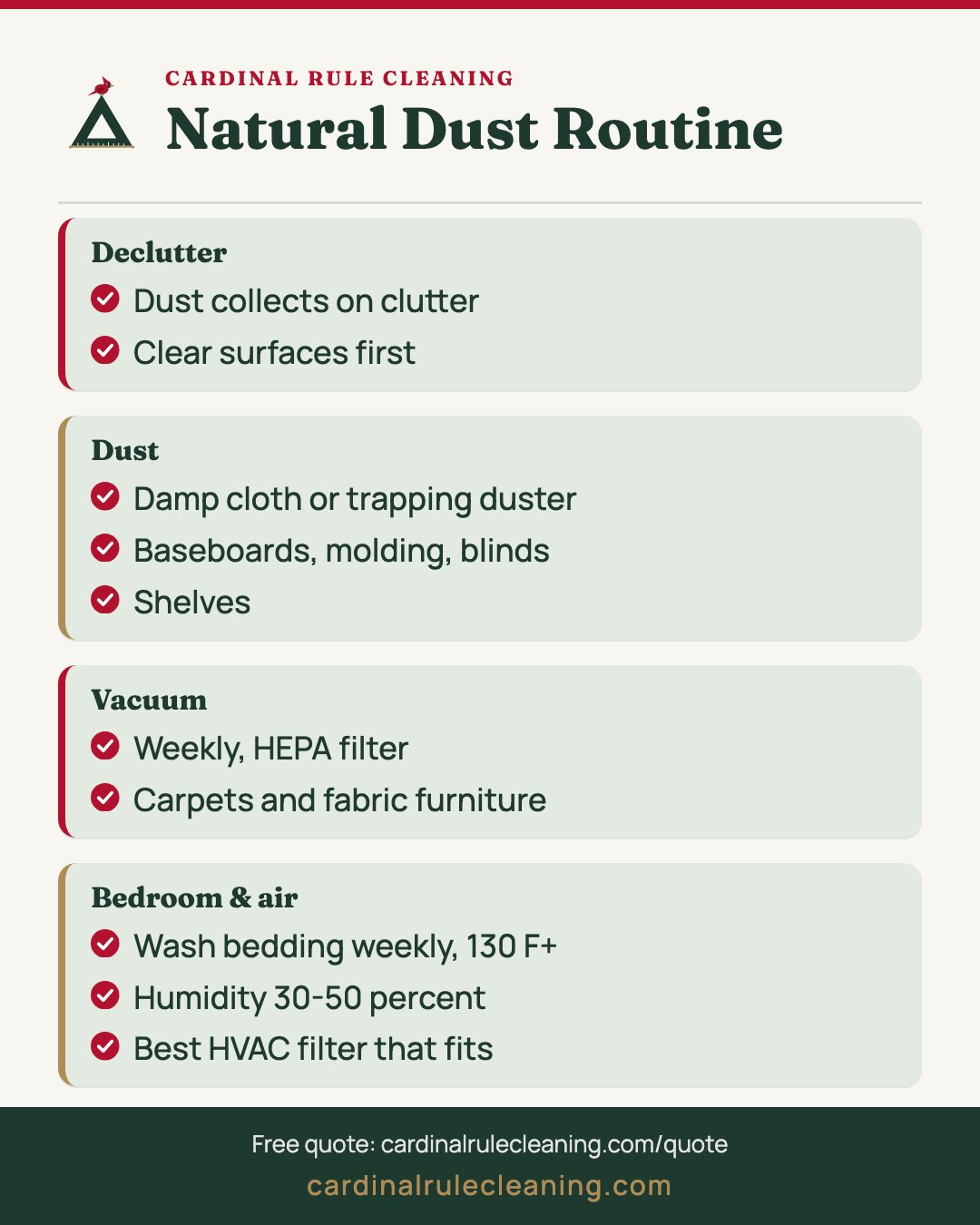
Dust with a damp cloth or dust-trapping duster in the spots where dust collects, such as baseboards, molding, blinds and shelves, then vacuum carpets and upholstered furniture weekly. Do it often and in short sessions. The American Lung Association says it only takes a few minutes to dust a space effectively.
A simple weekly pattern, drawn from the EPA and American Lung Association advice above:
- Declutter first. AAFA says dust tends to collect on clutter.
- Dust hard surfaces with a damp cloth or a duster that locks dust in. Practical tip: work high to low so falling dust lands on areas you have yet to clean.
- Hit the repeat spots: baseboards, molding, blinds, shelves.
- Vacuum last with a HEPA-filtered vacuum, carpets and fabric furniture especially.
The ALA briefing was produced with a cleaning-product maker; the ALA states it does not endorse any product. We cite it only for the dusting advice. For how often to schedule professional help, see weekly vs. biweekly house cleaning.
Does the bedroom need special attention?
Yes. AAFA says the bedroom usually has more dust mites than anywhere else in the home. Its steps include washing sheets, blankets and throw rugs weekly in water at least 130 degrees F, vacuuming the mattress every one to three months, and using zippered allergen-barrier covers on mattresses and pillows.
AAFA's dust mite guidance is a useful reference for bedrooms. Beyond bedding, it recommends:
- Choosing solid-surface flooring, roll-up shades and washable throw rugs where you can, since mites love wall-to-wall carpet, curtains and fabric-covered furniture.
- Keeping indoor humidity between 30 and 50 percent, using a dehumidifier or air conditioner if needed.
- Replacing pillows every two years and mattresses every 10 years.
AAFA also notes that dusting and vacuuming stir up dust, so someone without a dust mite allergy should do the bedroom if possible; otherwise it suggests wearing an N95 mask and staying out of the room for 20 to 30 minutes afterward.
Can your HVAC filter help with dust?
It can help. The EPA says routinely changing the air filters in your heating and cooling system may reduce some indoor allergens and particles. It recommends the highest-rated filter your system can handle, a MERV 13 or higher if possible, and suggests consulting an HVAC technician if you are unsure what fits.
The EPA says to use the highest-rated filter that your HVAC fan and filter slot can accommodate, and notes you may need a professional HVAC technician to determine what works for your system. It also says portable air cleaners that use a HEPA filter may offer improvements for some allergy or asthma symptoms.
AAFA cautions that devices that treat air with heat, electrostatic ions or ozone can pollute the air and irritate lungs, so check what any air device does before buying.
Filters handle airborne particles; they do not replace wiping and vacuuming. If you would like a recurring routine handled for you, Cardinal Rule Cleaning offers house cleaning in Raleigh and the surrounding Triangle, with deep cleaning available for a full reset.
Want a reset that gets the dust you can't reach? See our deep cleaning service or request a free quote.
Want this done for you? See our House Cleaning service or request a free quote.
Get your free house cleaning quote
Takes about 60 seconds. No obligation.
Frequently asked questions
What is the fastest way to get rid of dust in a house?
Declutter, wipe hard surfaces with a damp cloth, and vacuum with a HEPA-filtered vacuum. The EPA says damp dusting helps keep dust from going back into the air, and the American Lung Association says effective dusting takes only a few minutes per space. Repeat weekly for lasting results.
Is a damp cloth better than a dry duster?
The EPA says dusting hard surfaces with a damp cloth can help reduce putting dust into the air, and the American Lung Association recommends a damp cloth, damp mop or a duster that traps dust. Dry tools that simply flick dust can send it airborne again.
How often should you vacuum to reduce dust?
The EPA says vacuuming carpets and fabric-covered furniture every week can help reduce dust build-up, ideally with a properly fitted and maintained HEPA filter. AAFA also suggests a weekly HEPA vacuum. It adds that vacuuming alone does not remove all dust mites, since many live deep in bedding and upholstery.
Will opening windows reduce dust in the house?
Not necessarily. The EPA says outdoor air brings particles indoors through open doors and windows, and outdoor particle levels can be high any time of year. Before opening windows, the EPA suggests checking local air quality at AirNow.gov and pollen counts in your weather app.
Should people with asthma do the dusting?
The EPA says people with asthma or allergies should leave the area being dusted or vacuumed if possible, or consider wearing a mask covering nose and mouth. AAFA suggests an N95 mask and staying out of the room 20 to 30 minutes afterward. This is general information; ask your doctor.