How to Clean Wood Floors Naturally Without Damage
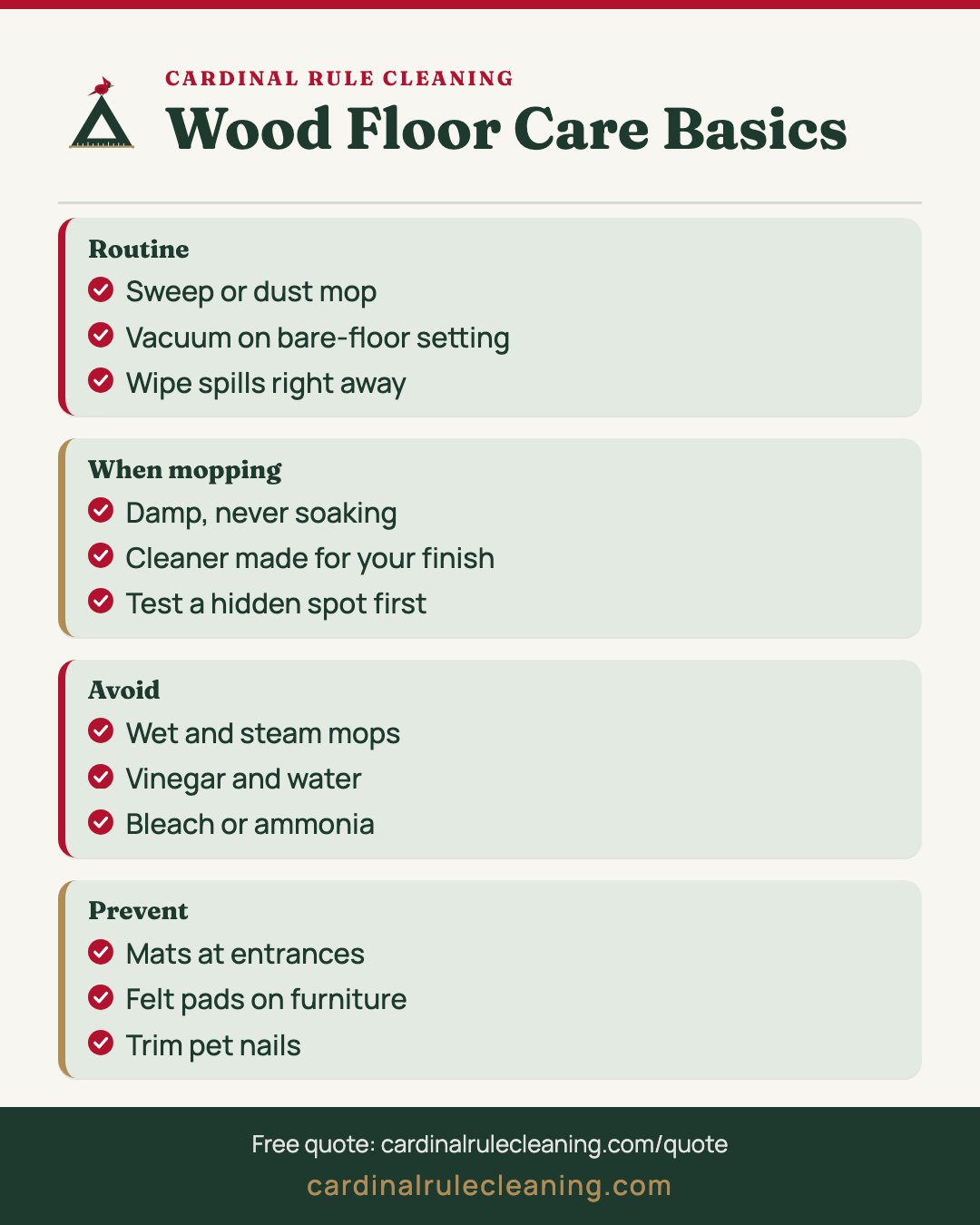
The natural way to clean hardwood floors is mostly dry. The National Wood Flooring Association says to sweep, dust mop or vacuum on a bare-floor setting, wipe spills right away with a dry or slightly damp cloth, and avoid wet or steam mops. Use a cleaner made for your floor's finish.
Key takeaways
- Routine care is dry: sweep, dust mop or vacuum with a bare-floor setting.
- Wet mops and steam mops can damage the finish and the wood over time, according to the National Wood Flooring Association.
- An NWFA-hosted guide advises against vinegar and water, which it says can damage finishes and leave a sticky residue.
- Wipe spills right away with a dry or slightly damp cloth, and test any cleaner in a hidden spot first.
- Mats, felt furniture pads and trimmed pet nails prevent much of the damage in the first place.
How do you clean hardwood floors naturally?
Keep it mostly dry. The National Wood Flooring Association says routine cleaning is sweeping, dust mopping or vacuuming on the bare-floor setting, and that spills should be wiped right away with a dry or slightly damp cloth. When a mop is needed, use a damp one, never a soaking wet one.
A truly natural wood floor routine has less to do with homemade solutions and more to do with how much water touches the floor. The sources point to the same approach:
- Remove loose dirt first. The NWFA says routine cleaning is sweeping, dust mopping or vacuuming using the bare-floor setting. An article hosted by the NWFA adds that skipping this dry step can scratch floors, because dirt and sand get dragged under a mop pad, and that mixing water with dirt makes mud and leaves floors dull and streaky.
- Clean spills at once. Use a dry or slightly damp cloth (NWFA). Blot rather than rub (NWFA-hosted guide).
- Mop only if needed, and only damp. The same guide advises a damp mop rather than a soaking wet one, working in small sections.
- Use a cleaner made for your finish. The NWFA says it is best to use a cleaner made for the floor's finish, which your flooring professional can recommend.
Note that the NWFA-hosted guide was written by a floor-care scientist at a household products company, so treat it as one expert source alongside the NWFA's own maintenance page.
Can you use vinegar and water on wood floors?
Flooring experts say no. An article hosted by the National Wood Flooring Association warns that vinegar's acidic nature can damage wood floors and their finishes over time, and can leave a sticky residue that attracts more dirt. It also advises against bleach or ammonia-based cleaners, which can strip the finish.
Vinegar is a popular household remedy, which is why this question comes up so often. For wood floors, the guidance is cautious:
- The NWFA-hosted guide lists vinegar and water with a traditional mop as a common mistake, citing acidity that can damage the wood and its finish over time and sticky residue that attracts dirt.
- It also lists bleach and ammonia-based cleaners as products to avoid.
- Shaw Floors, a flooring manufacturer, says not to use harsh chemicals, ammonia or abrasive cleaners, or oil-based wax or polish, on hardwood.
Vinegar can be fine in other places. See our guide to what not to clean with vinegar for the full list.
Is it safe to use a steam mop or wet mop on hardwood?
Generally no. The National Wood Flooring Association says not to use wet mops or steam mops, which will damage the finish and the wood over long periods of time. Shaw Floors gives the same advice. Excess water can seep into the seams, so never leave a wood floor wet.
Two independent sources, the NWFA and flooring maker Shaw, both say not to use wet mops or steam mops on hardwood. The NWFA-hosted guide explains the risk: excess water can seep into the seams and damage the wood, and traditional string mops and buckets put too much water on the floor.
If your floor is a different material, such as tile or vinyl, the rules change. This guide covers hardwood and the finishes the cited sources describe. When in doubt, check the floor manufacturer's care sheet.
How do you handle spills and sticky spots?
Blot a fresh spill right away with a soft cloth instead of rubbing, using a small amount of cleaner made for wood floors if needed. For gum, Shaw suggests hardening it with ice and gently scraping with an old credit card. Always test a cleaner in an inconspicuous area first.
Spot care is where the damp cloth earns its keep.
- Fresh spills: wipe up immediately with a soft cloth (Shaw) or a dry or slightly damp one (NWFA).
- Stuck-on spots: the NWFA-hosted guide suggests a soft cloth with a small amount of pH-balanced wood floor cleaner, blotting rather than rubbing. For stubborn stains, it suggests a wood floor stain remover that is safe for your floor type.
- Gum: Shaw says to use ice to harden it, then gently scrape with an old credit card.
- Test first: the NWFA-hosted guide says to try any cleaner in an inconspicuous area.
Waxes and oils are best left to professionals, per the same guide. It warns that many modern floors with factory finishes should avoid them entirely, because they may block future maintenance coats.
How do you prevent damage before it starts?
Block dirt and moisture at the door, protect the surface, and manage humidity. The NWFA-hosted guide recommends doormats and area rugs, felt pads under furniture legs, and consistent indoor humidity. Shaw also says not to drag heavy furniture and not to let pet nails grow too long.
Most floor damage is gradual. These habits reduce it:
- Place walk-off mats at entrances to trap dirt and moisture (Shaw, and the NWFA-hosted guide).
- Put felt pads under furniture legs (both sources).
- Keep indoor humidity steady, because wood can swell or shrink with excess moisture or dryness (NWFA-hosted guide).
- Keep pet nails trimmed (Shaw).
Pet owners have extra reasons to care about the floor. Our guide to deep cleaning a house with pets covers hair, odors and floors together.
How often should wood floors be cleaned, and who should do it?
Sources suggest dry cleaning daily or weekly, with a damp pass as needed. The NWFA-hosted guide says to dust and sweep daily or weekly; Shaw's weekly routine uses its recommended cleaner with a dry mop. Shaw also says to schedule professional floor cleaning every 6 to 18 months, depending on traffic.
Your schedule depends on traffic, pets and the finish. As a starting point, the sources describe:
| Task | Source guidance |
|---|---|
| Sweep or dust | Daily or weekly (NWFA-hosted guide) |
| Cleaner with a dry mop | Weekly (Shaw) |
| Professional cleaning | Every 6 to 18 months depending on traffic (Shaw) |
| Recoating when dull | New coat of finish, per the NWFA |
Recoating and refinishing are flooring-professional jobs, separate from house cleaning. For the day-to-day upkeep, a recurring house cleaning service can keep dust and grit under control. It is worth telling any cleaner which floors you have. If you are also weighing frequency, see weekly vs biweekly house cleaning, then request a free quote.
Want this done for you? See our House Cleaning service or request a free quote.
Get your free house cleaning quote
Takes about 60 seconds. No obligation.
Frequently asked questions
Is a microfiber cloth good for wood floors?
The NWFA-hosted guide recommends soft cloths for spot cleaning and dry cleaning cloths with a textured structure, which it says trap dirt, dust, hair and allergens better than a broom. Avoid soaking the cloth. For routine care, use it dry or slightly damp.
Can I use soap and water on a hardwood floor?
The NWFA says a cleaner made for your floor's finish is best, and the NWFA-hosted guide recommends a pH-balanced wood floor cleaner. If you try anything else, keep the cloth only slightly damp and test a hidden spot first. Never leave water standing on the floor.
What should I avoid putting on wood floors?
Avoid wet and steam mops, bleach, ammonia-based cleaners, abrasive cleaners, and vinegar and water, according to the NWFA, its hosted guide and Shaw Floors. Also avoid oil-based wax or polish, and leave any wax or oil application to a flooring professional.
Do pets damage hardwood floors?
They can. Shaw says not to let pet nails grow too long, and to wipe up spills right away. Pet accidents are best handled quickly with a dry or slightly damp cloth. Mats at entrances also help keep outdoor dirt off the floor.
Will a cleaning service refinish or treat my wood floors?
Refinishing, recoating and treating floors are flooring-professional work, not part of regular house cleaning. A recurring house cleaning visit is for routine dust and dirt. Before the first visit, ask any cleaner how they clean your specific floor type, and share your floor manufacturer's care sheet.