How to Remove Hard Water Stains From Glass Shower Doors
To remove hard water stains from glass shower doors, apply an acid such as white vinegar, let it sit so it can dissolve the mineral scale, then wipe with a soft cloth and rinse with clean water. Stubborn or silica-based spots may need a mild abrasive, used gently. Avoid razor blades and abrasive powders.
Key takeaways
- Hard water stains are mineral scale, and acid is what loosens it. Contact time matters more than muscle.
- A manufacturer care guide for coated shower glass suggests a 50/50 vinegar and water solution for hard water spots.
- Spots that vinegar will not lift may be silica. That guide points to cleaners with mild abrasives for those.
- Skip abrasive powders, razor blades and sharp tools, and never mix bleach with acids.
- Drying the glass after each shower slows buildup. Heavy buildup takes more time to undo.
What causes hard water stains on glass shower doors?
Hard water carries dissolved minerals, mainly calcium and magnesium. When droplets dry on glass, the minerals stay behind as scale. Wirecutter's writer found soap residue and dead skin cells mixed in with it. Some water also contains silica, which bonds to glass and is harder to remove than ordinary scale.
Every time shower water dries on the glass, it leaves something behind. In hard water, that is mostly calcium and magnesium. Wirecutter describes these as the main components of hard-water scale. Wirecutter's writer describes a door left a year and a half as caked with a mix of mineral scale, soap residue and dead skin cells.
Two details change how you clean it:
- Silica. A care guide from a coated-glass manufacturer says water softeners reduce certain minerals but do not remove silica, a naturally occurring substance in water that bonds easily to surfaces.
- Iron. Wirecutter notes a yellow or orange tint in the scale can signal iron in your water, which vinegar fights harder against.
If you are not sure which you have, the test in the next section tells you.
What is the best way to remove hard water stains from glass shower doors?
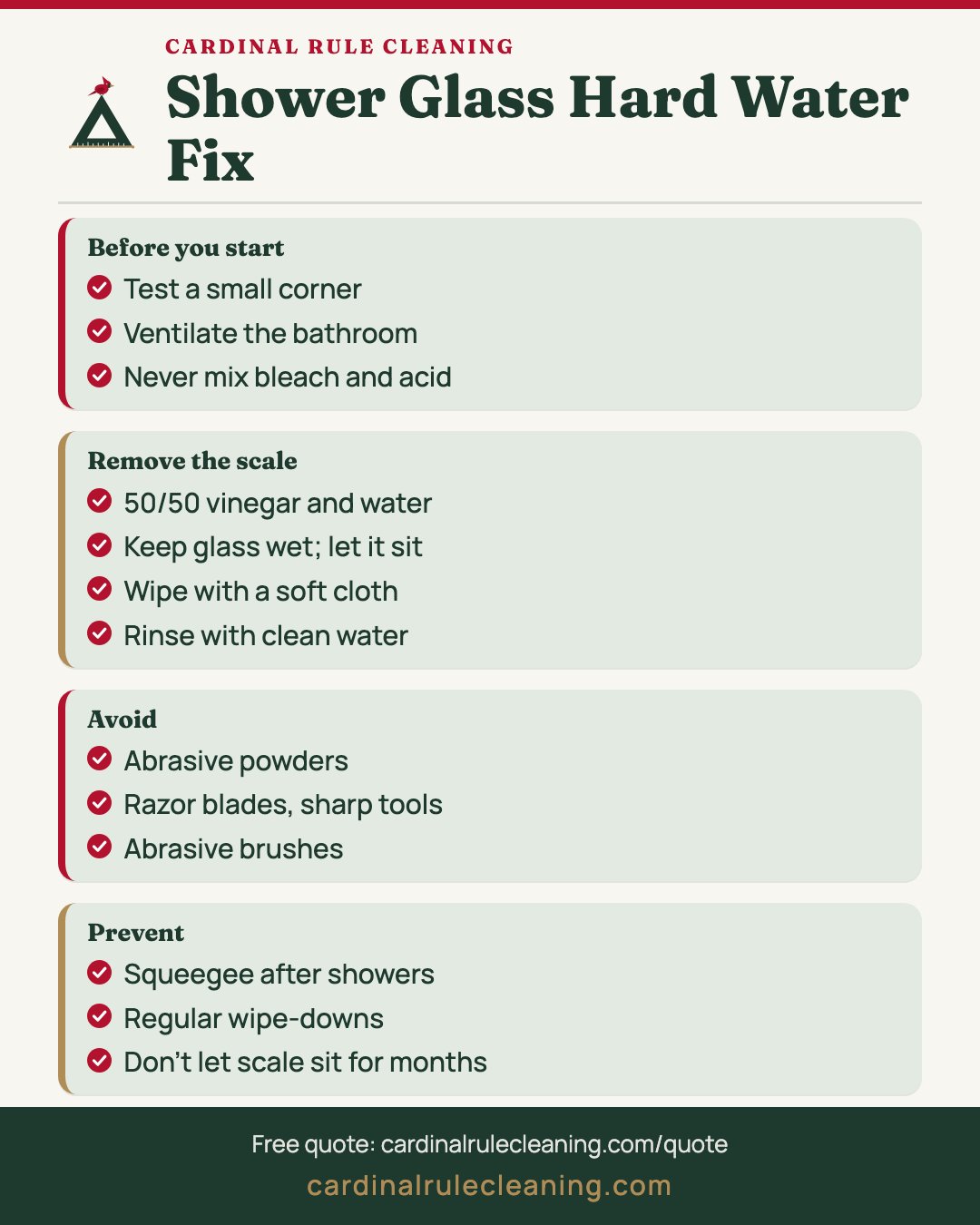
Use an acid and give it time. The coated-glass care guide suggests a solution of 50 percent white vinegar and 50 percent water for hard water spots. Let it sit, wipe with a soft cloth or non-scratch sponge, then rinse with clean water. Wirecutter says soak time can run from minutes to hours.
Wirecutter quotes an industrial water chemist saying any acid will work, as long as you apply enough and leave it long enough, which can be minutes to hours depending on the buildup. That is why patience beats scrubbing.
- Test a small corner first. Make sure the product suits your door, hardware and surrounding tile. The coated-glass guide warns some cleaners are not safe on uncoated glass, metal, tile, marble or brass.
- Apply the acid. Mix equal parts white vinegar and water, as the guide suggests, and apply it to the glass.
- Wait. Wirecutter says the acid needs enough time to work, anywhere from minutes to hours depending on the buildup.
- Wipe gently. Use a soft cloth or non-scratch sponge.
- Rinse. The same guide calls for a clean water rinse after cleaners.
- Dry. A squeegee or towel prevents fresh spots.
That guide suggests repeating about every 15 showers in hard water, and notes these are guidelines only.
Vinegar is not right for every surface in a bathroom, so see our guide on what not to clean with vinegar before you spray near stone or metal fixtures.
What if vinegar does not remove the stains?
If vinegar leaves the spots, they may be silica or iron-tinted scale. The coated-glass guide says cleaners with mild abrasives suit hard water with dissolved silica. Wirecutter says iron-heavy scale needs more acid and longer soaking, and that premixed hard-water cleaners remove guesswork on dosage.
The coated-glass guide lays out a simple rule: if water spots come off with vinegar, you have ordinary hard water. If they do not, the water may contain dissolved silica, and it recommends cleaners with mild abrasives. It says that in very high silica water, squeegeeing between cleanings may help.
Wirecutter's writer had a harder time. Vinegar and diluted citric acid did not lift the scale on a neglected door. A premixed hard-water cleaner worked better but did not remove everything, and an abrasive cleaner worked fastest, though a materials scientist told the writer abrasives can leave fine scratches. The article's advice is to try gentler methods first.
Two cautions from the same sources:
- Wirecutter says leave bleach out of this project. It cannot dissolve scale and can create a hazardous gas when mixed with acids or other cleaners.
- Wirecutter also reports chemists did not recommend muriatic acid, which can burn skin and damage metal fixtures.
Always follow the product label and ventilate the bathroom.
What should you never use on a glass shower door?
Avoid abrasive powders, razor blades, abrasive brushes and anything sharp. The coated-glass guide says to avoid abrasive cleaners, warns that brushes and sharp objects may scratch the coating or glass, and says hydrofluoric and phosphoric acid are corrosive to it. Do not mix bleach with acids. Check your door's manufacturer guidance first.
The coated-glass precautions list is blunt: avoid abrasive cleaners, do not use abrasive brushes, razor blades or other sharp objects, and do not use hydrofluoric or phosphoric acid because they are corrosive to the coating and glass. Remove construction materials such as silicone, paint or tape right away.
That guide is written for one type of coated glass. Your door may be different, so look for a care sheet from whoever made or installed it. The same guide also notes it does not recommend aftermarket wipe-on coatings for its glass, and that using one is at your own risk.
| Avoid | Why (per the sources) |
|---|---|
| Abrasive powders and brushes | Guide says avoid; abrasive brushes may scratch |
| Razor blades, sharp tools | May scratch coating or glass |
| Bleach mixed with acids | Can create a hazardous gas |
| Muriatic acid | Can burn skin and damage metal fixtures |
How do you keep hard water spots from coming back?
Remove the water before it dries. A squeegee or towel after each shower reduces mineral and soap residue buildup, according to the coated-glass manufacturer. Wirecutter's writer concludes prevention might be the best strategy: the harder your water and the longer between cleanings, the tougher the cleanup.
The coated-glass guide says drying the glass with a squeegee or towel after each shower helps prevent water spots, and reduces mineral and soap residue over time. Wirecutter ends on the same note: the harder the water and the longer you wait, the tougher the job.
- Squeegee or towel the door after the last shower of the day.
- Wipe with a vinegar and water solution on a regular schedule, and rinse.
- Do not let stains sit for months. Light scale is far easier than baked-on scale.
A routine house cleaning schedule can keep bathrooms from reaching that point. See our guide to weekly vs biweekly cleaning for how visit frequency affects buildup.
When should you call a professional for shower glass?
Call a professional when buildup has covered the glass for months, acid and gentle scrubbing have not worked, or you do not want to risk scratching glass or damaging fixtures. Wirecutter notes the longer you wait between cleanings, the tougher the cleanup. Cardinal Rule Cleaning offers deep cleaning in Raleigh.
Some jobs are about time rather than technique. If the whole bathroom needs attention, scale on the glass is usually one part of a bigger list: tile and grout, fixtures, sills and tracks.
Cardinal Rule Cleaning offers deep cleaning in Raleigh, Durham, Chapel Hill, Cary, Apex, Morrisville, Wake Forest, Holly Springs and Garner. Our deep cleaning checklist and how often to deep clean can help you decide when a deep clean makes sense.
We give you a clear price up front. Request a free quote and tell us about the shower when you do.
Want this done for you? See our Deep Cleaning service or request a free quote.
Get your free deep cleaning quote
Takes about 60 seconds. No obligation.
Frequently asked questions
Does vinegar remove hard water stains from glass?
Often, yes. Wirecutter says vinegar works for some people because it is effective on calcium and magnesium, the main components of scale. It may struggle with iron-tinted scale or silica. Use equal parts vinegar and water, give it time, rinse, and test a small area first.
Can I use bleach on shower door water spots?
No. Wirecutter says bleach cannot dissolve scale and can create a hazardous gas when mixed with acids or other common household cleaners. Because many scale removers and vinegar are acids, keep bleach out of the project and ventilate the bathroom.
Will a razor blade scrape off shower glass buildup?
Do not risk it. The coated-glass manufacturer's guide says not to use razor blades or other sharp objects because they may scratch the coating or glass. Wirecutter's writer saw videos of pros using scrapers with proper technique and lubrication, but that is a skilled method, not a casual one.
Why do spots return after a water softener?
Softeners reduce certain minerals but not silica, according to the coated-glass manufacturer. Silica bonds to glass and forms spots over time. The guide advises regular cleaning with recommended products. Drying the glass after each shower also helps remove minerals and soap residue.
How often should I clean shower glass in hard water?
One coated-glass guide suggests roughly every 15 showers for hard water, or about every 10 showers if silica is the issue, as guidelines only. Your humidity, hardness and shower temperature change that. Drying with a squeegee between cleans stretches the time.