How to Clean an Oven Naturally, Step by Step
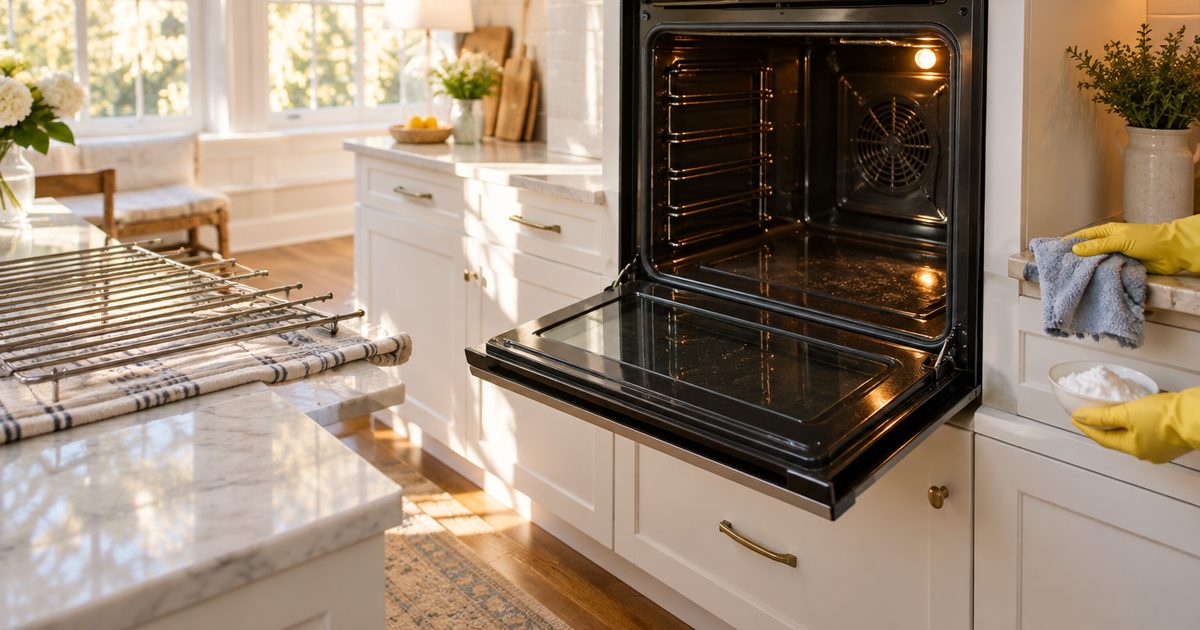
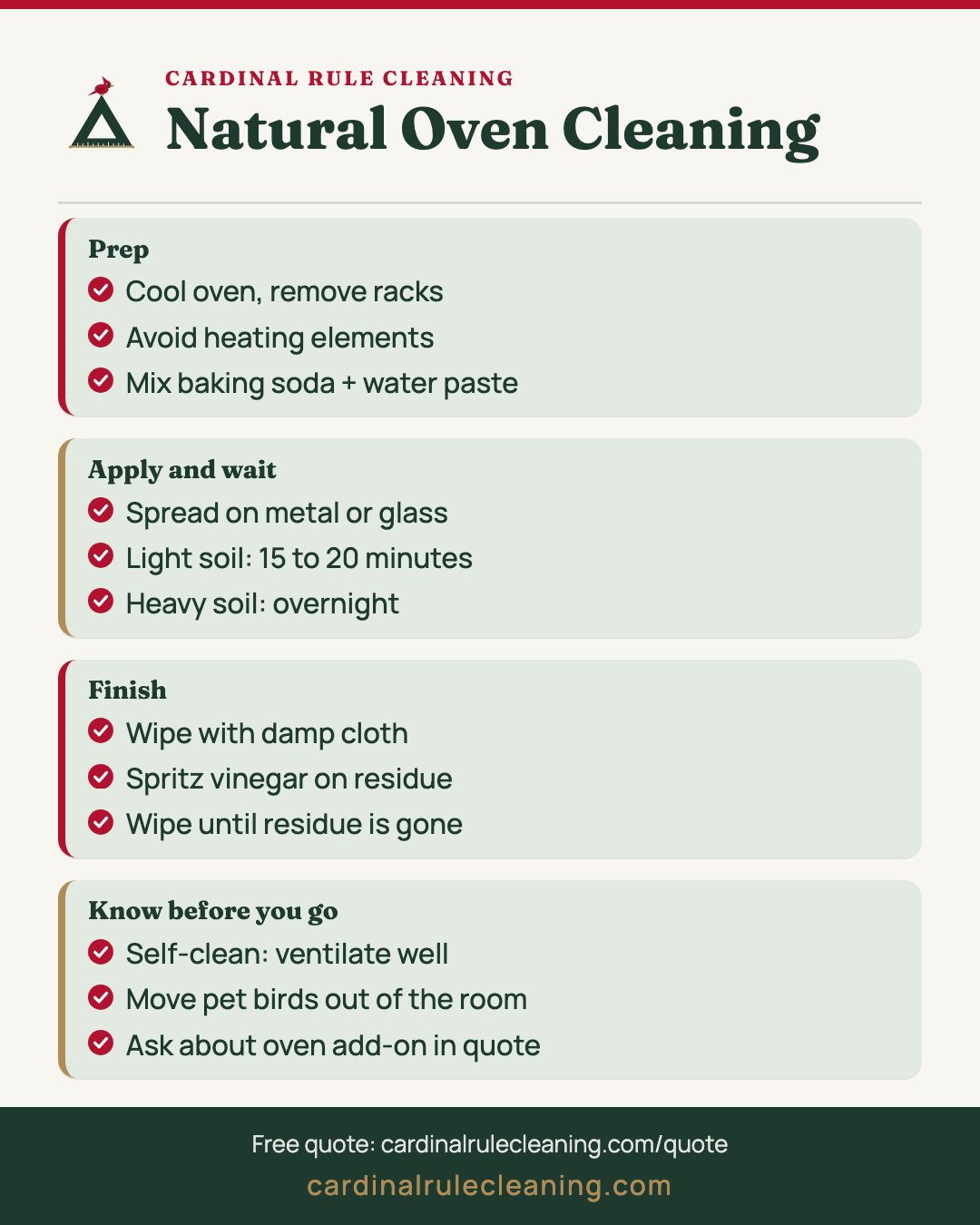
To clean an oven naturally, remove the racks, spread a paste of baking soda and a little water over the interior (away from the heating elements), and let it sit. Arm & Hammer says 15 to 20 minutes for light soil; The Kitchn leaves it overnight. Then wipe out the paste and finish with vinegar and water.
Key takeaways
- The core method is a baking soda and water paste, left to sit, then wiped out and rinsed with a vinegar and water wipe.
- Light soil needs about 15 to 20 minutes; heavy, baked-on soil is left overnight.
- Keep paste off the heating elements, and let the oven cool before you start.
- Self-clean is a separate choice: Whirlpool's guidance covers ventilation and warns that some birds are very sensitive to the fumes.
- Inside-oven cleaning is a common add-on to ask about in a professional quote, not something to assume is included.
How do you clean an oven naturally with baking soda?
Remove the racks, mix baking soda with a little water into a spreadable paste, and coat the oven interior, steering clear of the heating elements. Let it sit, then wipe it out with a damp cloth and finish with a vinegar and water wipe. The Kitchn and Arm & Hammer both describe this method.
Two sources agree on the basic method. The Kitchn's editors tested five all-natural oven cleaning methods and landed on baking soda and vinegar. Arm & Hammer, a baking soda maker, publishes a similar recipe. Here are the steps:
- Empty the oven. The Kitchn says to take out racks, a pizza stone, an oven thermometer and anything else inside.
- Mix the paste. The Kitchn uses 1/2 cup baking soda with a few tablespoons of water, adjusted until spreadable. Arm & Hammer's basic recipe for a lightly soiled oven is 1/2 cup baking soda and 3 tablespoons water, about the consistency of pancake batter.
- Spread it on. Cover the interior, metal or glass, and avoid the heating elements. Arm & Hammer says to use a rubber spatula or a gloved hand.
- Wait. See the timing table below.
- Wipe it out. The Kitchn suggests a damp cloth, with a plastic or silicone spatula for stubborn spots.
- Finish with vinegar. Spritz white vinegar where residue remains. It foams gently with the baking soda. Wipe until no residue is left. Arm & Hammer's final wipe uses plain water or a 3:1 mix of water and distilled vinegar.
- Put the racks back.
How long should baking soda sit in an oven?
It depends on how dirty the oven is. Arm & Hammer says 15 to 20 minutes for a lightly soiled oven and an overnight rest for a heavily soiled one. The Kitchn's tested method also uses at least 12 hours or overnight. Longer contact is for baked-on grease; shorter is for regular upkeep.
| Situation | What the sources say |
|---|---|
| Regularly cleaned or lightly soiled | Arm & Hammer: 1/2 cup baking soda and 3 tablespoons water, left 15 to 20 minutes. |
| Heavily soiled | Arm & Hammer: 1 pound baking soda, 1 tablespoon salt and 2 tablespoons water (add water 1/2 tablespoon at a time if needed), left overnight in the cold oven. It says to triple the recipe for the back, sides, ceiling and floor. |
| Fresh spill | Arm & Hammer: sprinkle baking soda on the stain, spritz with water or a 3:1 water and white vinegar mix, wait 15 to 20 minutes after the oven has cooled, then wipe. |
| Deep clean with vinegar finish | The Kitchn: let the paste rest at least 12 hours or overnight, wipe out, then spray vinegar and wipe again. |
If a spot is still there after the first round, Arm & Hammer says to repeat for tougher stains.
What about oven racks, the glass door and spills?
Pull the racks out and clean them separately while the paste works; The Kitchn links its own tested rack method. Glass can take the same paste, since Arm & Hammer says to smear it on metal or glass. For a fresh spill, sprinkle baking soda on it, spritz with water, let the oven cool, then wipe.
Racks are easiest to handle while the paste is working inside the oven. The Kitchn suggests cleaning them during the overnight wait.
The door needs one extra bit of care. Whirlpool's self-clean instructions say to wipe the inside door edge by hand with a damp cloth, not to let water, cleaner or any liquid enter the slots on the door frame, and not to clean, rub, damage or move the oven door gasket. Those are sensible habits whichever method you use. Check your own owner's manual for your model.
Should you use the self-clean cycle instead?
That is your call, and your owner's manual rules. Whirlpool describes the cycle as using very high temperatures to burn soil to ash, and warns that some birds are extremely sensitive to the fumes. The Kitchn and Arm & Hammer cite odor, smoke and alarms as reasons to skip it. Heavy soil means more smoke.
Whirlpool's tips for its self-cleaning ovens include:
- Self-clean before the oven becomes heavily soiled, because heavy soil means longer cleaning and more smoke.
- Keep the kitchen well ventilated, and do not block the oven vents.
- Remove the racks, broiler pan, cookware and foil first, and wipe out loose soil.
- Expect the door to lock. The cycle time includes a 30-minute cool-down.
If you have a pet bird, Whirlpool says to move it to another closed, well-ventilated room. The ASPCA also advises getting veterinary advice when using cleaning products around birds, which it calls extremely sensitive to fumes. The paste method in this guide is done with the oven off, so it does not involve the self-clean heat cycle.
What should you avoid when cleaning an oven naturally?
Keep the paste off the heating elements, and let the oven cool completely before starting. Treat the paste method and the self-clean heat cycle as two separate jobs, and follow your manual for the heat cycle. If you do use a commercial oven cleaner, follow its label, which Arm & Hammer says calls for long gloves and avoiding fumes.
A few simple guardrails, all drawn from the sources above:
- Avoid the heating elements. Both The Kitchn and Arm & Hammer say to steer clear of them.
- Start with a cool oven. Arm & Hammer's spill method waits until the oven has cooled.
- Rinse well. Keep wiping until no baking soda or vinegar residue is left.
- Follow your manual. Oven finishes and features differ by model, so the manufacturer's instructions come first.
"Natural" does not mean there is nothing to think about. If you have pets, the ASPCA says most cleaning products are safe around dogs and cats when used as labeled, so keep them out of the kitchen while you work.
Is cleaning inside the oven part of a professional deep clean?
Check the scope before you book. Deep cleaning at Cardinal Rule Cleaning covers kitchen items such as the stovetop, the range hood exterior and the inside of the microwave. Inside-oven cleaning is a common add-on to ask about in your quote, or you can use the DIY steps in this guide.
If you would rather hand the job off, read the scope before you book. Our deep cleaning service covers kitchen items such as the stovetop and range hood exterior. If you want the oven interior handled, ask about it as an add-on when you request a free quote. Pricing is quoted by home size and condition.
To compare what a deep clean usually covers, see our deep cleaning checklist and deep cleaning vs regular cleaning. For a plant-forward approach to the rest of the kitchen, read how to clean stainless steel appliances and what eco-friendly cleaning means.
Want this done for you? See our Deep Cleaning service or request a free quote.
Get your free deep cleaning quote
Takes about 60 seconds. No obligation.
Frequently asked questions
Can you clean an oven with just baking soda and water?
Yes. Arm & Hammer's basic recipe is baking soda and water, spread on, left for 15 to 20 minutes and wiped off. A vinegar and water wipe afterward is optional in its instructions. The Kitchn's version adds a vinegar spritz at the end to remove any leftover baking soda residue.
Does the baking soda and vinegar method work on baked-on grime?
For stuck-on grime, The Kitchn says to stick with baking soda and vinegar. Arm & Hammer's heavy-duty version is left overnight in the cold oven, and it says to repeat the process for tougher stains. Results vary with how long the soil has been there.
Should I leave the oven door open while the paste sits?
The sources do not say to leave the door open or shut for the standard paste. Arm & Hammer's heavy-duty method does shut the door for the overnight rest. Follow your owner's manual for your model, and keep the oven off and cool throughout.
Is vinegar safe to use inside an oven?
Both The Kitchn and Arm & Hammer use white vinegar inside the oven, as a final spritz or a 3:1 water and vinegar wipe. Models and finishes differ, so check your manual. On exterior stainless steel, manufacturers disagree about vinegar, as covered in our stainless steel guide.
Will a house cleaning company clean my oven?
It depends on the company and the service. Inside-oven cleaning is a common add-on, so ask about it when you request a quote from any provider, including Cardinal Rule Cleaning. Scope and pricing are quoted by home size and condition.