What to Do With Your Pets When Cleaners Come to Your Home
Keep pets in a separate, comfortable space while cleaners work. Angi advises crating dogs and closing cats behind a door, and Humane World for Animals says to keep pets out of the room during cleaning and away from wet floors and counters until they dry. Talk with your cleaning company beforehand.
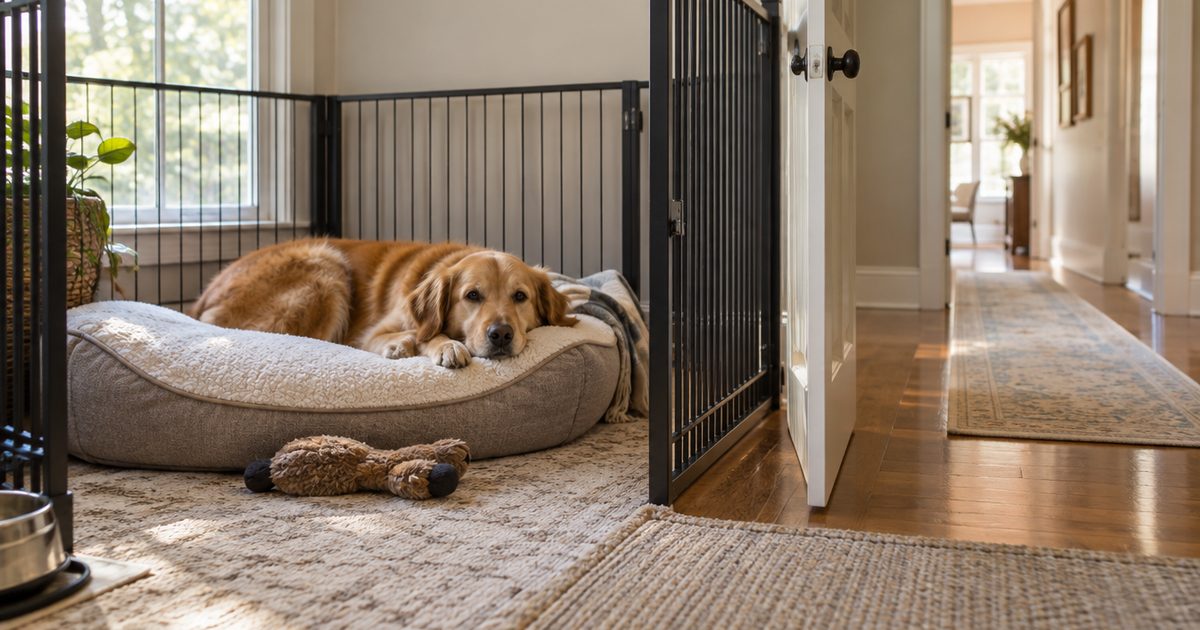
Key takeaways
- Plan a comfortable spot for pets away from cleaners, such as a crate or a closed room.
- Humane World for Animals advises keeping pets out of rooms being cleaned, and away from wet surfaces until dry.
- The ASPCA says most cleaning products are safe around dogs and cats when used per label directions. Birds are extremely sensitive to fumes.
- Cleaners may have allergies or phobias, another reason to put pets away.
- Ask your cleaning company about its products and how it handles pets. Do not assume.
What should you do with your pets when cleaners come?
Put pets in a safe space away from the work area, such as a crate or a closed room, until the cleaners finish. Angi lists this as part of house cleaner etiquette. It keeps animals from underfoot and from freshly cleaned surfaces, and spares cleaners who have allergies or phobias.
Angi's guidance on preparing for a house cleaner is direct: crate your pup and keep your cats behind closed doors. It gives two reasons. Animals may get in the way, especially if they follow the cleaner around, and the cleaner may have allergies or phobias.
A simple way to make it work:
- Pick a room the cleaner does not need, and keep the door closed.
- Tell the cleaning company about your pets when you book, not on the day.
Our general house cleaner prep checklist covers everything else to do before a visit.
Are cleaning products safe for pets?
The ASPCA says most cleaning products are safe to use around dogs and cats as long as they are used per label directions, and advises checking with a veterinarian for birds, which are extremely sensitive to fumes. Always follow label directions, and ask a manufacturer or vet if you have questions.
The ASPCA's poison-control guide states that most cleaning products are safe to use around dogs and cats when used per labeled directions. For birds, it advises getting veterinary advice, because they are extremely sensitive to fumes.
Humane World for Animals puts the cautionary side clearly: the ingredients that make disinfectants effective, such as alcohol, bleach, hydrogen peroxide and phenol compounds, can be toxic to companion animals, and using more than the label recommends is not better. Its advice is to read labels, follow instructions exactly, and store products where pets cannot reach them.
This is general information from those organizations, not veterinary advice for your pet. For questions about a specific product or animal, contact your veterinarian or the manufacturer. Our guides to cleaning products safe for dogs and bleach around pets go deeper.
What about wet floors and freshly cleaned surfaces?
Keep pets away from wet floors and counters until they dry. Humane World for Animals advises this for any cleaner or disinfectant, and the ASPCA says to guide a pet elsewhere if it seems overly interested in a freshly mopped area. Mild irritation or stomach upset can occur if pets walk through or lick solutions.
Wet surfaces are where the risk concentrates, because pets walk through them and then lick their paws. The ASPCA notes that mild skin irritation or stomach upset may occur if pets walk through a wet floor or lick any solution. Humane World for Animals gives the same practical rule: keep pets away until surfaces dry, and ideally rinse floors with water.
Humane World also says to rinse out buckets and mops when done with liquid cleaners. The ASPCA advises disposing of unused or dirty solutions and putting mops and other cleaning implements away in areas pets cannot access.
If your pets stay in a closed room until the visit ends and floors have dried, you cover most of this without extra effort. Ask your cleaner roughly how long floors take to dry so you know when to let animals back.
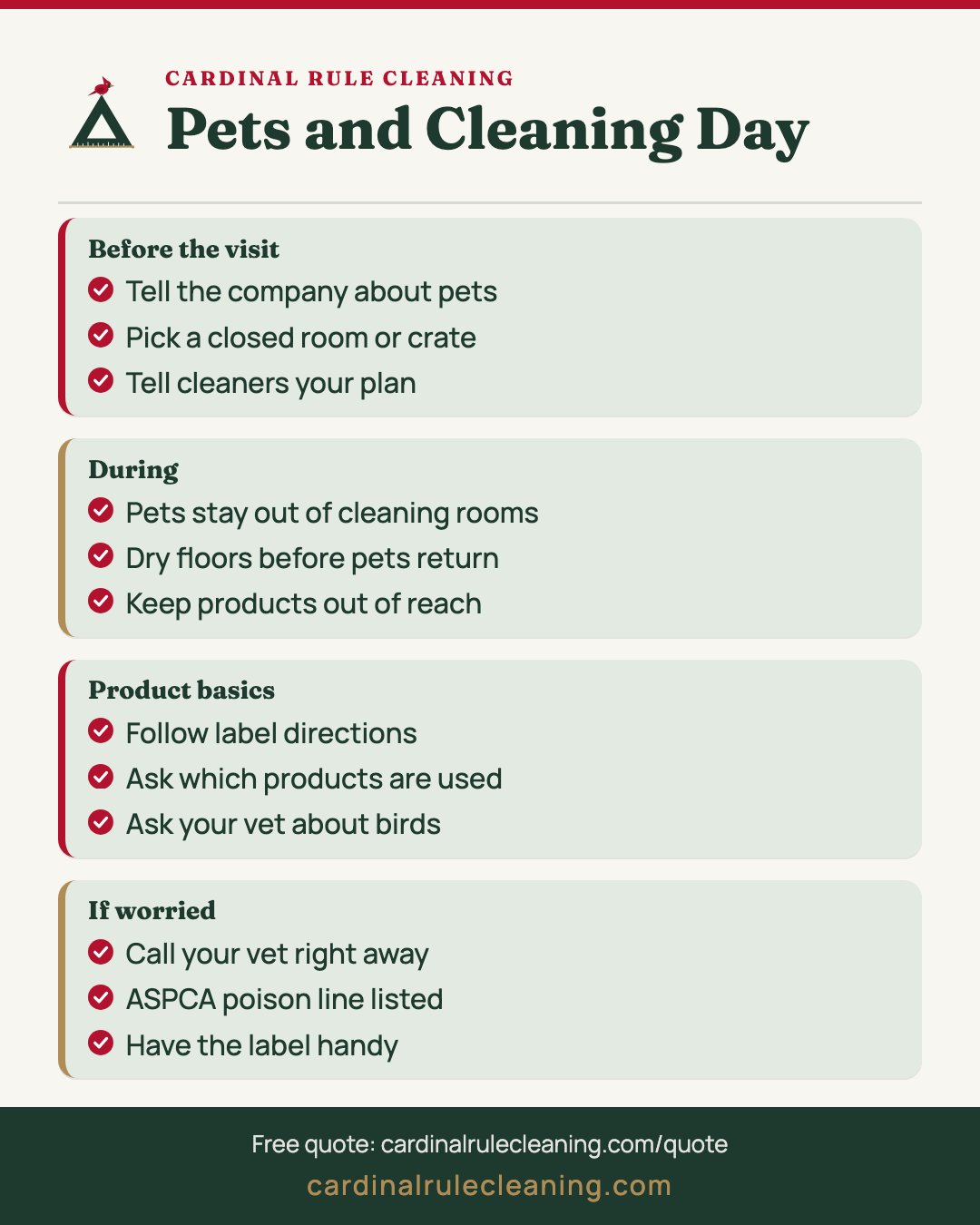
Which pets need extra care?
Cats and birds call for particular attention. Humane World for Animals says cats are especially vulnerable because they are small, constantly lick their fur, and explore with nose and paws. The ASPCA says birds are extremely sensitive to fumes. Dogs may lick paws and lap up liquids left in buckets.
Humane World for Animals notes that cats and dogs are both at risk, but cats are particularly vulnerable: they are small, they groom constantly, and they are curious about new items. Dogs lick their paws too and may lap up liquids, especially from buckets. The ASPCA flags birds as extremely sensitive to fumes, and recommends veterinary advice when using cleaning products around them.
- Cats: keep them out of rooms being cleaned and away from open product containers.
- Dogs: crate or confine them, and keep them off damp floors.
- Birds: the ASPCA advises getting veterinary advice before using cleaning products around them.
If you think a pet has ingested something, the Humane World article says to seek veterinary help right away, and gives the ASPCA Animal Poison Control Center number as (888) 426-4435. Call your local emergency vet in the meantime.
What should you ask your cleaning company about pets?
Ask which products they use, how they handle pets in the home, and whether they follow label directions on dilution and drying times. Every company is different, so get answers before the visit. You can ask these questions when you request a quote from any company.
Rather than assume, bring these questions to the conversation:
- What products will be used, and can I see the labels?
- How do you handle pets that are in the home on cleaning day?
- Will floors be wet, and for how long?
- Is there anything I should put away, such as pet food, toys, litter boxes or bedding?
- Who do I tell about a pet that is nervous, escapes easily, or is fearful of strangers?
The ASPCA notes that cleaning products vary in ingredients and degrees of safety, so label directions still matter for every product. Read more in what eco-friendly cleaning means and what pet-friendly cleaning means.
Our house cleaning serves Raleigh, Durham, Chapel Hill, Cary, Apex, Morrisville, Wake Forest, Holly Springs and Garner. Ready to book? Request a free quote and tell us about your pets when you do.
Want this done for you? See our House Cleaning service or request a free quote.
Get your free house cleaning quote
Takes about 60 seconds. No obligation.
Frequently asked questions
Should I be home with my pets when cleaners come?
You can be, but it is not required. The goal is keeping pets safe and out of the way. Angi suggests crating dogs and keeping cats behind closed doors. If you leave, make sure pets are secured in a comfortable space and tell the company beforehand.
Is it okay for my dog to be loose while the cleaner works?
Angi's etiquette is to crate dogs, noting that animals can get in the way. Humane World for Animals adds that dogs lick their paws and may lap up liquids left in buckets, and advises keeping pets away from wet floors and counters until they dry.
Can cleaning products make pets sick?
Possibly, if misused. The ASPCA says most cleaning products are safe around dogs and cats when used per label directions, but mild skin irritation or stomach upset may occur if pets walk through or lick a solution. Contact your veterinarian with any concern. This is general information.
What if my pet licked a freshly cleaned floor?
Humane World for Animals says to seek veterinary medical help right away if you suspect poisoning, and to call a local emergency vet for advice. If the vet is not immediately available, it lists the ASPCA Animal Poison Control Center at (888) 426-4435. Possible symptoms it names include vomiting, diarrhea, lethargy and seizures.
Do I need to tell the cleaners I have pets?
Yes, tell them when you book. Angi notes a cleaner may have allergies or phobias, which is one reason to put pets away. Also mention a pet that is nervous, escapes easily or reacts to strangers, so the cleaners know what to expect when they arrive.